


I’ve been meaning to provide an update on the Access 65 for awhile now and a recent comment on my previous post just reminded me to do that. Also realizing how many times I tried to find user-specific information on the jig before I bought it, I really want to give out as much info on the details as possible for those thinking of getting this frame fixture.
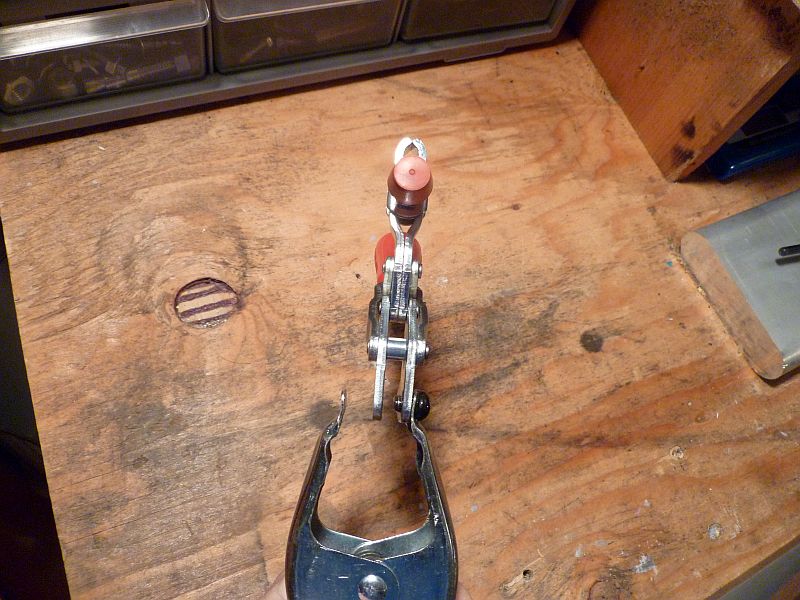
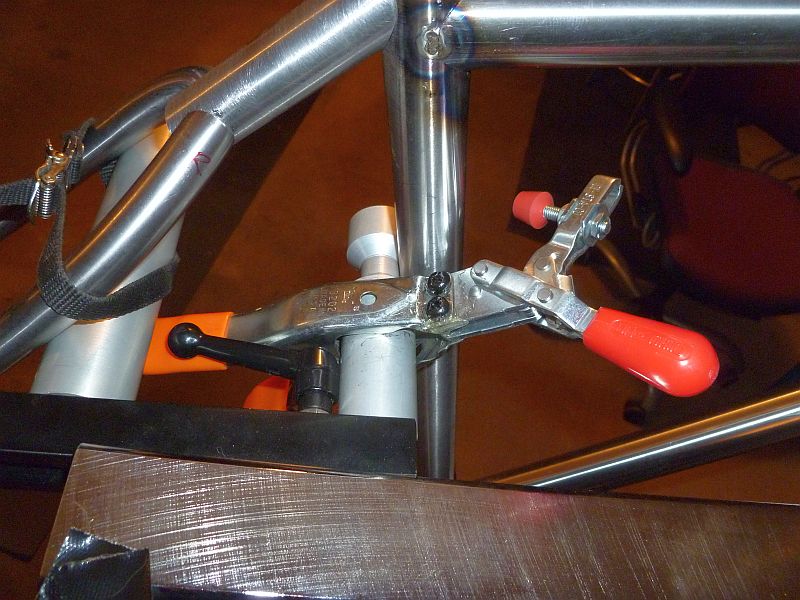
The first thing I did was make a little seat tube holder from a Pony clip ($4) and a vertical toggle clamp ($12). I pretty much stole this idea (again) from a picture I saw on Garro’s blog (Coconino Cycles) but instead of using a Sputnik braze-on clamp I made this lil thing, which works really well if I do say so myself. Just had to drill two holes into the toggle clamp, find two screws that fit, and done! Maybe a 5 minute job.

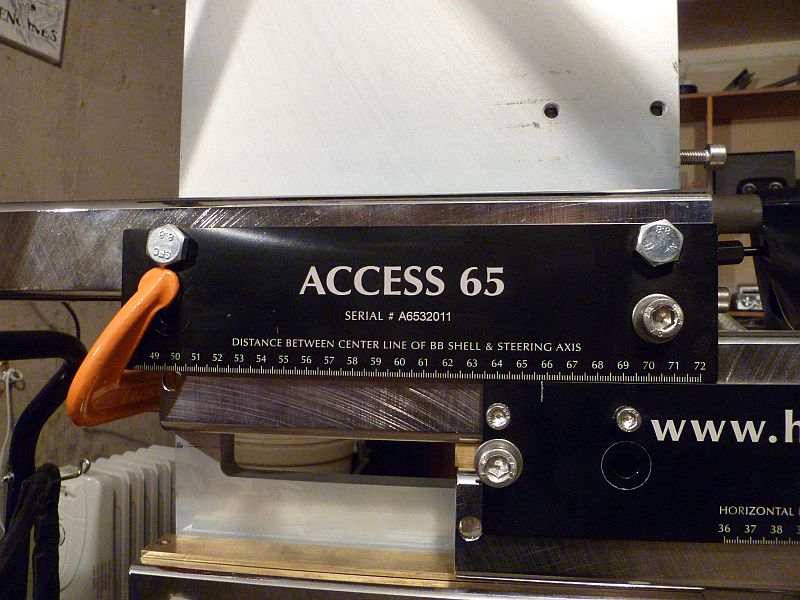
Apparently, I’m the first one that has questioned Hank about this in the 8-year life of this frame fixture which was obviously really surprising to me. He said this will be fixed in the next version of the jig. All it’ll take is drilling and tapping another hole into the black Access65 plate and into the rear aluminum plate about 2-3cm to the right of the hole currently there (there’s a little scratch mark where I’ll do this once this frame is done). I’m sure other people noticed this issue but have just placed a C-clamp in place of the bolt to keep it tight and inline (like I did below). I just thought i was doing something wrong so had to call Hank and see what my novice dumbassity was doing now!
UPDATE: 9/30/2001.
The frame jig has helped me build 6 frames up till now. I still love how simple and relatively light it is and how much access you have to the backside of joints. There are things I would change but overall I’d recommend it. Most of my issues could be seen as “opportunities” to create add-ons to the fixture and be creative and learn in doing so. The first thing I’d love to see added would be some type of chainstay support beam that sandwiches the stays so they don’t fall to the floor dinging the tubes and the nice miters you just spent so much time finishing. This is not a huge deal if you use plate-style dropouts and slot your chainstays, but when you use Breezer/Wright-style dropouts there is nothing but pressure to hold them in there while you tack. I end up having to do a bit of TIG-Twister to hold the chainstay in there with my left hand and putting in a light tack on the bottom bracket/chainstay juntion without using any filler rod. There’s plenty of room to make your own fixture and attach it to the Access 65’s main chainstay bar…but to me it further highlights that this jig was made with building lugged frames in mind. This also holds for the seat stays. The bar that comes with the jig is great for placing the stays against to measure and miter, but with hooded dropouts, they tend to not stay put very well. A tube clamp extension from the main jig would be really nice to have. I have been using an old toe-strap but it only does it’s job half-well and is mostly just for holding it there while you tack.
44mm head tubes:
A really cool thing I found out by accident is that if you want to use a 44mm ID head tube on a frame, the stock head tube cones will not work – they’re too small. I found some “Frame jig centering cones” on eBay, made for motorcycle jigs, that fit PERFECTLY onto the 3/4″ head tube bar of the Hank 65. I mean, perfect. All you have to do is flip the stock cones on the bar, inserted the new bigger moto-sized cones and voila’…pretty easy and cheap fix (they were $35 and they are still up there on a continuous auction if you search).

Setting the frame dimensions: Head tube height:
I also wanted to update this post (my most popular post by far since there is very little working info on the Hank 65 online) on how you transfer your BikeCAD or other dimensional drawing to the fixture. BikeCAD, under “Dimenions” and “Jig Setup” tab has a checkbox to show the “Henry James 2” jig setup measurements. There are two major lengths shown – the length from the center of the BB to the centerline of the head tube, and the length from where the BB/HT axis intersection up to the bottom of the head tube (see pic).

The BB to HT axis measurement is integrated into the jig – it’s one of the three square bars that slide horizontally and it’s easy to set. I talked about it above in the first update. But the HT/BB centerline measurement is not integrated into the jig itself but needs to be set with a customruler supplied with the jig. The below pics show how it’s done.


- There’s also a peg on the BB so you can double-check the effective chainstay and seat tube length. This isn’t necessary but it’s an option. (I never use it for this purpose.)
