
Note: this is a pretty esoteric blogpost…bike geeks may even get bored.
I have a pretty crazy wall of tires in the shop. I have a problem. It all started when i built my first fatbike in 2012. Surly had released the Pugsley with the Endomorph, a relatively small 26×3.8″ tire, but that still meant designing a new frame to fit those fatties. The fatter Moonlander had “4.7” inch tires with an offset rear triangle but not knowing fatbikes yet I didn’t think that was necessary.
Custom bikes are usually the first out of the gate when there’s a new tire or ‘standard’ so it helped to have the physical tires in hand for drawings. Fatbikes changed how I build forever. I feel like i learned the hard way since everything is different – frame and fork clearances, BB spindle width and the resulting Q-factor and chainline, and hub widths.
Next came the “plus” tire movement after the Surly Krampus was released with the 29×3″ Knard. Then we got 27.5×2.8 from WTB, and then 27.5×3, and a couple of 3.25, and then one of my favorites: 29×2.8, and now 2.6…which seems to be sticking around while the others disappear. All those sizes are on my wall, just in case i need them again.
When someone wants a bike you have to know what tire clearance the frame needs to fit and there was no way of knowing what the actual tire specs without measuring it: diameter, width, and radius of the widest point of the tread and casing. (It’s common that the stated specs don’t match the measured specs, and when you’re designing a frame to have 6mm of space on either side of the tire, every millimeter matters.) Fat and Plus tires were so new that the only places the measurements were found was on forums, or when someone like me would buy, measure, and post it on Flickr or my blog. Surly came out with a tire size spec sheet eventually when other companies needed to know how wide to space their chainstays to fit their tires. Also for people to see if their old bike could fit a bigger tire in there.
The photos below aren’t about these types of bikes. The latest plus trend has been with gravel bikes, as you’re well aware. With a notable exception or two (Rock n Road, Nokian Hakka), all that was available in the last 30 years was 700×35 and nothing changed for a long time. Around 2012, 700×40’s came out with the Clement/Donnelly MSO X’plor and in 2014 the WTB Nano. Then 650b had a resurgence with the #plushlyfe movement spurred along by Compass/Rene Herse, WTB, and others. You could usually fit a fatter 650 on your cross bike and improve the ride for gravel riding because the added comfort of the larger tire and lower PSI as well as the more stable lower BB height. Tanwalls made people buy new tires just for aesthetics, and may as well size up if your bike can fit it! There are so many tire options now it’s hard to believe that it wasn’t too long ago we were riding 26×2’s and that was all that was available for dirt riding (unless you were on a Jobst ride doing epic gravel rides on 25mm road tubulars…).
But the point being what…? Tires matter. They change the behavior of a bike drastically. I’d argue more than frame material and bike weight, within a reasonable range. I recently punctured my 650×48 Panaracer Gravelking SS tires so they wouldn’t hold air for long even with added sealant. I love these tires, great road feel and at 30psi didn’t feel slow at all. I swapped to a more “winter road friendly” tire that is 42mm and of a harder compound and about the same weight. The center roll strip is thicker than the rest so to have less resistance going straight on pavement. Mostly I wanted more puncture resistance. But the bike now rides worse, like due to the difference in compound as well as smaller size. I feel every crack on the road. It also changed the steering dynamics where i now get that 650b “dive” in corners. I’ll keep them on for a little while but this is one reason why i have so many tires. Trial and error…never know until you try it! Next will likely be some Rene Herse Babyshoe Pass 42’s in the Endurance casing. I seem to flat anything more supple be it road debris or slicing or puncturing on a rock while riding dirt. The Endurance casing isn’t as comfy as the lighter options but it definitely lasts longer. Tires aren’t cheap!
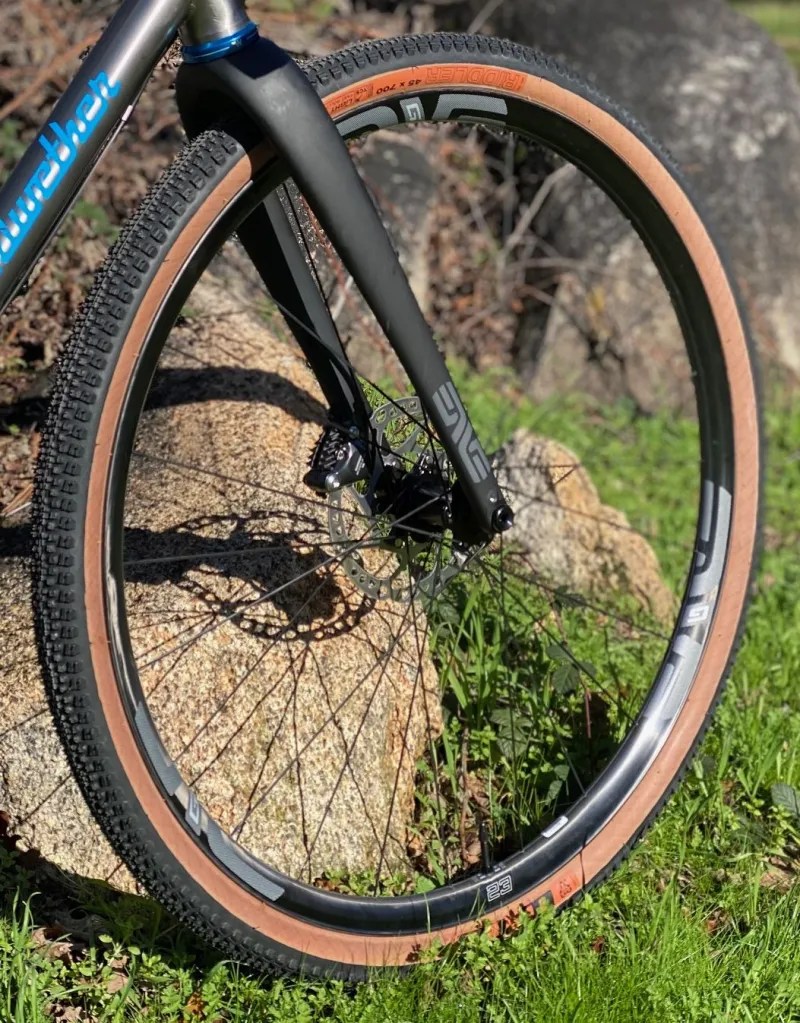
Knobby gravel tires are another story. Some roll pretty well, but those usually don’t handle well on dirt – braking and climbing traction especially. With proper tire pressure they can corner OK but when a tire has knobs that are optimized for consistent cornering traction on pavement, it’s just not going to corner that well on dirt. Bigger side knobs make a difference, they hook up better. On road they don’t feel great on sharp turns, but heck…they’re not road tires. One tire won’t do it all well, but one bike with a couple of wheelsets can check a lot of boxes.




Discover more from Meriwether Cycles
Subscribe to get the latest posts sent to your email.
I never ever stop experimenting with new tires. They can make a bike come alive….Or make it feel terrible!
Side Note: I just wanna look at those bikes in that 1st shop/Garage pic!
So far, I picked up a pair of WTB Venture 700×50 which have handled the “gravel” around the American River Parkway pretty well this winter with only 3 rides. I’ll know more as the miles add up. They roll pretty well on pavement and clear the sandy mud pretty fast. That impressed me. The Vittoria Terrano XC’s had no traction but they are pretty much a slick. Glad to know I’m not one to keep tires.
Thanks for the update!
I love the Venture tires, way more grippy on dirt than I expected based on tread pattern. At the start they kept a lot of dirt in the tread to fling out at me, lol, but got better as they wore in. Good to know about the Terrano’s, haven’t tried those.
Planning my next road/gravel frame around a Sabre Pro TR 29×2.6. Gotta start with the tires first, Right?!
Indeed, especially when it’s a pretty big tire!