
In the early 2000’s I picked up Front Range Descents, likely from the my favorite of all ski shops, Neptune Mountaineering in Boulder. This guidebook was published in 2003 and highlights the classic ski descents in the Indian Peaks Wilderness Area – Rocky Mountain National Park to the north and James Peak to the south. The Indian Peaks is where the Continental Divide reaches its easternmost point in the US, being just 25 miles west of Boulder and the start of the Great Plains. Even having lived in Boulder for over 10 years at that point in time, i had only hiked the 14er Long’s Peak and done one overnight backpacking trip to King Lake just north of Rollins Pass. So this book opened up a new world to me as I learned to telemark ski and venture as far as i could into the backcountry in winter. I felt like i had found religion, and on skis of all things. I grew up alpine skiing but as a young skateboarder, once I got a Burton Performer Elite in 1985 I instantly ditched the skis and didn’t get look back until i strapped on telemark skis 15 years later. The freedom skis allowed in the backcountry is what hooked me, you can go anywhere and break your own trail. It was a new world, stunningly beautiful, quiet, and wild. It was the XC mountain biking of the snow world, where if you put in the work on the uphill there were fun rewards on the downhill, except in snow you make your own trail. I became an “earn your turns” evangelist. Because of the tricky Continental snowpack of the Rockies many backcounty skiers stay below treeline in winter and don’t ski off the high peaks until Spring when the snowpack is mostly settled. The routes in Front Range Descents are all achievable with little true ski mountaineering knowledge or gear but it is best practice to don sharp pointy objects including boot crampons and an ice axe or two to get up to the top while the snow is still hard.
Like everyone before the internet and iPhones in the early 2000’s we relied on paper maps, altimeter, and a compass to help us get lost. I had started using a Garmin GPS unit that allowed mapping our routes and that was super fun overlaying our tracks on hand drawn routes of where we *thought* we were traveling. The background maps on the GPS units were in their infancy but even having a background map was a huge help. Just being able to see where you were on the USGS topo map was invaluable.
As i got to be a better skier I’d made my way through a lot of the classic routes in the book but one was particularly enticing every time i flipped through the pages looking for the next line to try. It was the longest tour in the book and the most difficult to pull off but I knew we were moving back to California soon and this route had to be done so in June, 2010 I made it happen.
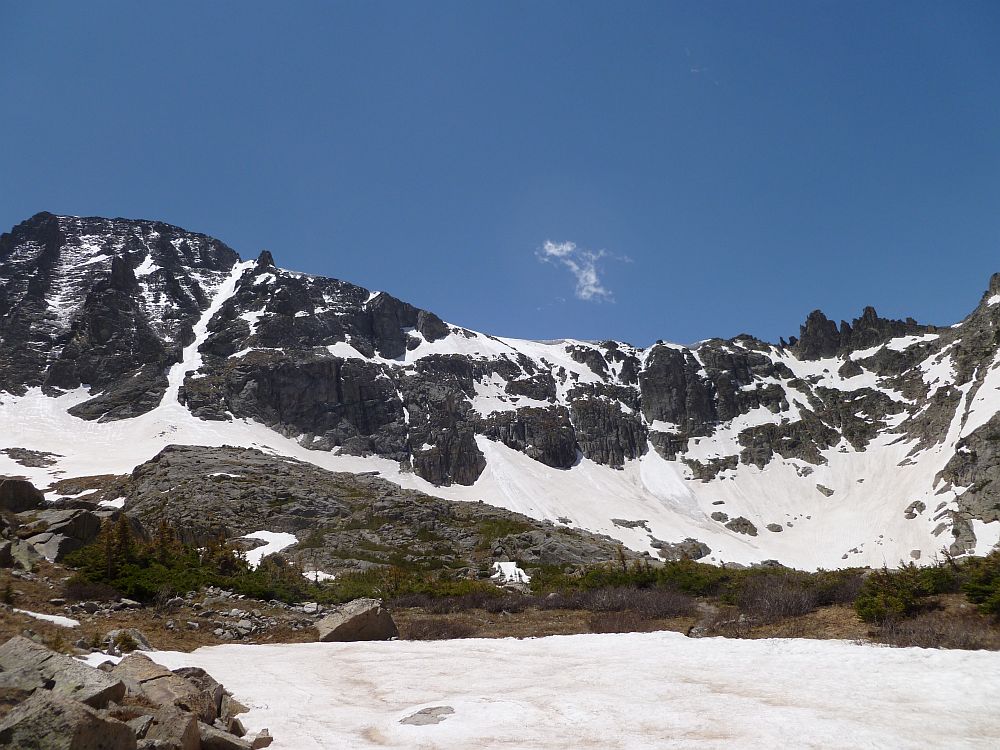
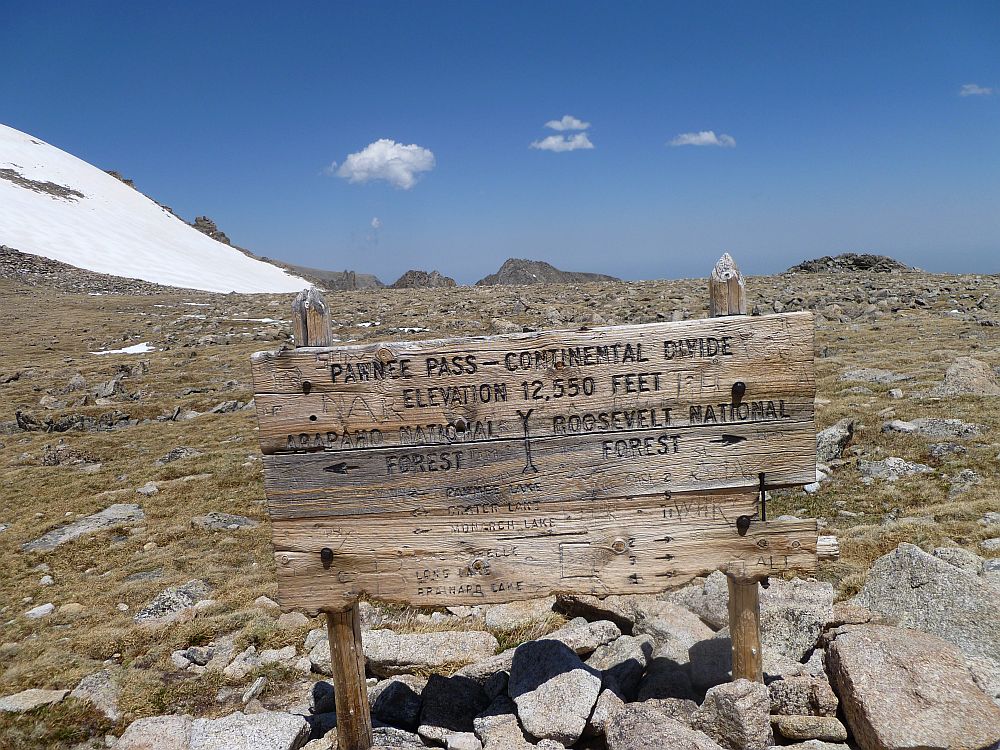
The route starts at Brainard Lake, if the gate is open you can drive up or bike if it’s closed. From there it’s a 20 mile loop with approximately 5,800ft of climbing. The route goes over the Continental Divide by climbing up Apache couloir, descending around 1,800ft vertical on Fair glacier to Triangle lake, and onto Cascade creek where you eventually meet the Pawnee pass trail. Taking a right, you climb up and over the backside of Pawnee Pass, crossing the Divide again and then down one of the lines off Pawnee Peak. For me it was an afternoon descent of a very mashed potatoes slope to lake Isabelle and back to the trailhead but if you’re fast you may get better conditions. The guide book says have a beer and that’s exactly what I did, sitting on the tailgate reflecting on an epic day. The Supertour lived up to its name. No records broken and it’s not a big route compared to the crazy folks going after FKT’s on the “LA freeway” but it was a big tour that I’ll never forget, sitting atop Apache’s south ridge looking down Fair glacier, no buzzing of yet-to-be-created drones, no bluetooth speakers, nobody but me in remote a spot as I’ve ever been, knowing I was leaving this place and likely not coming back.




Discover more from Meriwether Cycles
Subscribe to get the latest posts sent to your email.
Leave a Reply